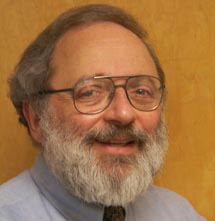

Baecker is an active researcher, lecturer, and consultant on human-computer interaction and user interface design, user support, software visualization, multimedia, computer-supported cooperative work and learning, the Internet, entrepreneurship and strategic planning in the software industry, and the role of information technology in business. He has published over 100 papers and articles on topics in these areas. He is also the author or co-author of two published videotapes and of four books:
Baecker is also the founder and CEO of Expresto Software Corp, a firm that helps enterprises with eCommerce, eLearning, and eSupport through the creation and Web distribution of visual, interactive, self-serve explanations. He was previously the founder and CEO of HCR Corporation, a Toronto-based UNIX contract R&D and technology development and marketing firm, sold in 1990 to a U.S. competitor.
Professor Baecker developed, and currently teaches, The Business of Software (CSC 454/2527). Students wishing to enroll in this course must complete a ballot form and return it to the student counselor in SF 2304D (along with supporting documentation) by the date posted by the undergraduate secretary. Enrolment is limited. Late ballots will not be considered.
Another course developed by Professor Baecker, Design of Interactive Computational Media (CSC 318), is currently being taught by Professor Ravin Balakrishnan.
Information in parenthesis indicates the relevant publications. B = books, P = papers, and F = film or video. The link will take you to the corresponding section of the Publications page.
 One current research project is centred in the ePresence lab, and seeks to make webcasting highly interactive, more engaging, scalable, robust, and accessible both in real-time and via archives. The lab's work can be applied to enhancing distance learning, facilitating collaboration in global corporations, and improving continuing medical education. For more information click here.
Baecker is also active in research on understanding and trying to develop solutions to the problems of technology complexity and feature bloat, trying to bridge the gap between what users know and what they need to know. [P2] This has included work on using visual explanations in place of text to demonstrate procedures and to answer questions. He was also the co-supervisor on
Joanna McGrenere's recent Ph.D. thesis which characterized the impacts of bloat on users of a leading word processor and developed and studied a user-adaptable, switchable interface to that word processor.
[P1]
A third project, just beginning, intends to prototype, design, construct, and evaluate a family of electronic memory aids that will go significantly beyond current PDA and ubiquitous computing technology in assisting people to remember things and helping them when they forget. This work will leverage an existing research project on time based email visualization and management.
[P2, P11]
For more information click here.
Past research has been highlighted by innovations and work in other areas of HCI and knowledge media design:
 For a selection of Dr. Baecker's publications please click on the "Publications" bar.

