Kabbash, P., MacKenzie, I.S. & Buxton, W. (1993). Human performance
using computer input
devices in the preferred and non-preferred hands. Proceedings
of InterCHI '93, 474-481.
Human Performance Using Computer Input
Devices in the Preferred and
Non-Preferred Hands
Paul Kabbash , I. Scott MacKenzie & William Buxton
Input Rsearch Group
Computer Systems Research Institute
University of Toronto
Toronto, Ont. Canada M5S 1A4
416-978-1961,
buxton@dgp.toronto.edu
ABSTRACT
Subjects' performance was compared in pointing and dragging tasks using
the preferred and non-preferred hands. Tasks were tested using three different
input devices: a mouse, a trackball, and a tablet-with-stylus. The trackball
had the least degradation across hands in performing the tasks, however
it remained inferior to both the mouse and stylus. For small distances
and small targets, the preferred hand was superior. However, for larger
targets and larger distances, both hands performed about the same. The
experiment shows that the non-preferred hand is more than a poor approximation
of the preferred hand. The hands are complementary, each having its own
strength and weakness. One design implication is that the non-preferred
hand is well suited for tasks that do not require precise action, such as
scrolling.
KEYWORDS: Hand comparisons, computer input, Fitts' law.
INTRODUCTION
Increasingly, human-computer interaction supplements the familiar QWERTY
keyboard with spatial controllers such as the mouse, stylus, or trackball.
Nearly all such non-keyboard devices are operated with the preferred, "dominant"
hand only. This contrasts with the everyday world, where the non-dominant
hand is also used to perform spatial tasks. If one wants to design user
interfaces to capture this common skill, there is little in the literature
to serve as a guide.
This paper explores the performance of the non-preferred hand when interacting
with various computer input devices for pointing, selecting, and dragging
tasks. It is a repeat of an earlier experiment [11],
that investigated the preferred hand in these same tasks. We compare performance
across hands for three input devices: mouse, trackball, and stylus. The
metrics for comparison in the present report are movement time and accuracy.
PREVIOUS RESEARCH
This study builds upon previous research in three distinct areas: Fitts'
law models for psychomotor behavior, lateral asymmetries, and HCI. On its
own, each is represented in the literature; however, only a few studies
have attempted to reconcile issues of mutual interest.
Fitts' Law Models
One of the most robust and highly adopted models of human movement is Fitts'
law [4,5]. The model
is, arguably, the most successful of many efforts to model human behavior
as an information processing activity. (For detailed reviews, see [10,12,20].)
Fitts was interested in applying information theory to measure the difficulty
of movement tasks and the human rate of information processing as tasks
are realized. Fitts argued that the amplitude of a move was analogous to
electronic signals and that the spatial accuracy was analogous to electronic
noise. He proposed that the "index of difficulty" (ID)
of a movement task could be measured in "bits" as the logarithm
of the amplitude moved (A) divided by the tolerance or width (W)
of the region within which the move terminates.
In this paper, we use the Shannon formulation for the index of task difficulty
[10]:
ID = log2(A/W + 1). (1)
In calculating ID, we adjust target width to reflect the spatial
distribution of responses. This is in keeping with the information theoretic
premise of the law, in which target width is analogous to a Gaussian distributed
"noise" perturbing the intended signal (i.e., amplitude). The
normalized target width is usually called the "effective target width,"
We [10].
Lateral Asymmetries
Three theories have been proposed to account for the between-hand performance
differences in rapid aimed movements.
The first is that preferred and non-preferred hands differ primarily in
their use of sensory feedback control [6,17,21].
In expounding this theory, Flowers [6] contrasted
"ballistic" and "controlled" movements. He found that
the preferred and nonp;preferred hands of strongly lateralized subjects
achieved equal rates in a rhythmic tapping task, but that in a variation
of Fitts' reciprocal tapping task (ranging from ID=1 to ID=6)
the preferred hand outperformed the nonp;preferred hand by 1.5 - 2.5
bits/s, with differences marked at all but the lowest two IDs.
A second theory is that the preferred hand is less "noisy" in
its output function. Accordingly, increases in movement amplitude or decreases
in movement time require a greater force, which leads to greater output
variability and thus more errors [16]. Annett
et al. [1] suggested that this theory
could be adapted to account for differences between hands in a peg transfer
activity in which movement time was a dependent variable.
A third model, which predicts a left-hand advantage for larger target distances,
was suggested by Todor and Doane [18]. This
model, in a sense, expands on Flowers' notion of feedback control by incorporating
both a left-hemisphere/right-hand superiority for sequential processing,
and a right-hemisphere/left-hand superiority for non-adaptive parallel processing.
The model was based on Welford's proposal that rapid aimed movements are
composed of two distinct parts: a "fast distance-covering phase and
a slower phase of 'homing' on to the target" [20].
The first phase is similar in speed to ballistic movement, but the second
phase requires an additional process of visual control. They hypothesized,
assuming contralateral control for the movements, that the right and left
hands should exhibit a performance advantage in task conditions favoring
the dominant processing mode of the contralateral hemisphere; specifically,
that within tasks of equivalent calculated difficulty, movement time in
the right hand should increase as the width and amplitude of the target
grows larger while it should decrease in the left hand.
Although the association between motor programming and the spatial complexity
of a task has been questioned in the literature, particularly by Quinn et
al. [19], our interest in the Todor and Doane
model is primarily in the practical result. In designing computer interfaces
that allow for separate input from the non-preferred hand, it is useful
to discern features of the task, aside from difficulty, that give a consistent
advantage (or disadvantage) to the non-preferred hand. The issue of program
complexity in itself, however, will not be directly addressed.
Human-Computer Interaction
A number of studies have been published which compare the usage of various
input devices. This literature is effectively surveyed elsewhere [7,13].
However, we have found few studies that compare performance of the dominant
vs. non-dominant hand in spatial tasks. An exception is Boritz, Booth,
and Cowan [2] who tested a group of left-handed
subjects and a group of right-handed subjects in a simple target selection
task. Their study was flawed, however, in that the left-handed group had
considerable prior experience using the mouse in the right hand, owing to
the forced position of the mice in the computer lab.
Buxton and Myers [3] performed two experiments
examining two-handed input. In the first, the non-dominant hand scaled
an object while the dominant hand positioned it. In the second, the non-dominant
hand navigated (scroll and jump) through a document while the dominant hand
selected specified pieces of text. These experiments clearly demonstrated
that users could easily use the non-dominant hand in such tasks.
MacKenzie, Sellen, and Buxton [11] showed that
Fitts' law was applicable beyond traditional target acquisition tasks to
include tasks such as dragging. This experiment provided half of the data
for the current study. It tested the mouse, trackball, and tablet-with-stylus
and found performance decrements for dragging compared to pointing. This
degradation was concluded to be due to interference between the target acquisition
task and maintenance of the dragging state (for example, holding down the
mouse button while dragging). This degradation was found on each device
for the criterion variables movement time and error rate. The amount of
degradation was not uniform across devices, however. Significant one-way
effects and two-way interactions revealed that the trackball was more prone
to errors during dragging. Movement time was significantly longer for the
trackball on both tasks; however the degradation during dragging was more
pronounced for the mouse than for the trackball or stylus.
The experiment described in the next section emerged from the following
hypotheses:
H1 Preferred and non-preferred hands yield the same speed,
accuracy, and bandwidth using the mouse, trackball, and stylus in pointing
and dragging tasks.
H2 Devices using small muscle groups (e.g., trackball) produce smaller
differences between hands than devices using large muscle groups (e.g.,
mouse & stylus).
Of course, the first hypothesis is a null statement leading to the usual
statistical tests. Differences were fully expected. A major motivation
in the present study was to determine the extent of such differences.
METHOD
Subjects
In all we tested 24 subjects, comprising two independent groups of 12 (11
male, 1 female in Group 1; 9 male, 3 female in Group 2). The two groups,
computer literate staff or students from local universities, served as paid
volunteers. All subjects were self-declared right handers; but as an additional
criterion for Group 2 we administered the Edinburgh Inventory for handedness
[14], requiring a laterality quotient of at
least +80.
Apparatus
The two groups were tested at different times, but on identical equipment.
Subjects performed the tasks on an Apple Macintosh II using three input
devices: the standard mouse, a Wacom tablet-with-stylus (model SD42X) used
in absolute mode with a pressure sensitive stylus, and a Kensington trackball
(model Turbo Mouse ADB Version 3.0). The equipment was set up with the
input device on the right of the keyboard for Group 1 and on the left for
Group 2. All devices were adjusted for a control/display ratio of approximately
0.5.
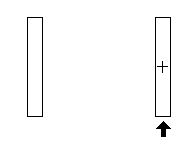
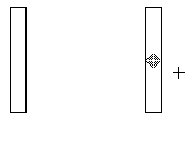
(a) (b)
Figure 1. Experimental tasks were (a) pointing and (b)
dragging.
Procedure
Subjects performed multiple trials on two different tasks with three different
devices using their right hand (Group 1) or left hand (Group 2). The operation
of the devices and the requirements of the tasks were explained and demonstrated
to each subject before beginning. One warm-up block of trials was given
prior to data collection.
The two tasks were "point-select" and "drag-select."
For the point-select task, shown in Figure 1a, subjects moved the cross-hair
cursor (+), back and forth between the targets and selected each target
by pressing and releasing a button on the mouse or trackball, or by applying
and releasing pressure on the stylus.
The arrow in Figure 1a pointed to the target to be selected. This helped
maintain stimulus-response (S-R) compatibility as subjects proceeded. For
the dragging task (Figure 1b), subjects acquired the small diamond-shaped
object by pressing and holding the device button (on the mouse and trackball)
or maintaining pressure on the stylus, and then dragged the object to the
other target and deposited the object in the target region by releasing
the button or pressure.
Subjects were instructed to balance speed and accuracy for an error rate
around 4%. The software generated a beep as feedback for monitoring target
misses.
Design
A 2 x 4 x 4 x 3 x 2 (hand x amplitude x width x device x task)) factorial
design with repeated measures was used. Hand was a between-subjects factor,
with Group 1 tested on their right (preferred) hand and Group 2 tested on
their left (non-preferred) hand. All other factors were within-subjects.
The A-W conditions were chosen to exactly mimic Fitts' [4]
original experiments with a stylus. There were four levels each for A (64,
128, 256, or 512 pixels) and W (8, 16, 32, or 64 pixels).
The A-W conditions were presented in random order with a block of
ten trials performed at each condition. A session consisted of a sequence
of sixteen blocks covering all A-W conditions. Ten sessions were
sequenced for each device, alternating between pointing (five sessions)
and dragging (five sessions). The initial task was chosen by the toss of
a coin. Device ordering was counterbalanced.
The system collected three measurements for each trial: movement time and
the X and Y selection coordinates. Dependent variables were movement time,
bandwidth, error rate, variable error, and constant error. Each of the
accuracy measures describes different response behaviors (see, for example,
[12]).
Constant error is the mean deviation of responses from the target center.
Constant error quantifies systematic biases of the responses from the target
center; i.e., the tendency to overshoot or undershoot the targets.
Variable error is the standard deviation of movement endpoints along the
horizontal axis. This corresponds to effective target width (We
= 4.133 x SDx; see [10]). There are important
distinctions between variable error and error rate despite their high correlation
in Fitts' law tasks when error rates are below about 15% [9].
Error rate is especially relevant in HCI research, in the sense that the
human operator is interested only in the success or failure in performing
an operation, not in whether the effort was, for example, a near or far
miss. Variable error, however, captures endpoint variability over all movements
and so describes more completely the behavior.
Bandwidth, a composite of movement time and variable error, is a dependent
variable meriting a separate analysis. Due to space limitations, bandwidth
is not discussed further in the present paper.
RESULTS
Adjustment of Data
Newman-Keuls tests were performed on the session means at each hand x device
x task condition for the first three dependent variables (36 tests). Overwhelmingly,
the first session differed from groupings of sessions 2-5, and sessions
2-5 did not differ among themselves; and so, the data from the first session
were discarded.
On the remaining data, using the same decomposition, outlier trials were
eliminated where the X coordinate was more than three standard deviations
from the mean. We also eliminated trials immediately following deviate
trials (see [15]).
Movement Time (MT)
For each dependent variable an analysis of variance was used with repeated
measures on device and task. Mean movement times for the two hands are
summarized in Table 1, decomposed by device and task. As expected, the
right hand outperformed the left hand (F1,22 = 15.5, p < .001) with overall
movement times of 889 ms and 1044 ms, respectively.
The main effects of device and task were highly significant (F2,44 = 273,
p < .001 & F1,22 = 124, p < .001, respectively). The effect of
task was reflected in much slower MT for dragging (1060 ms) than pointing
(873 ms). There was, however, no interaction of hand x task (F1,22 = .044),
and performance in both hands degraded equally. For each hand the slowest
device by far was the trackball with performance on the other two devices
slowing somewhat from stylus to mouse. A significant interaction of hand
x device (F2,44 = 10.7, p < .001) can be attributed to the trackball.
That is, from preferred to non-preferred hand the degradation in mouse
and stylus was large but equal (roughly 27%), whereas there was no difference
in MT between hands on the trackball (F1,22 = 1.52, p > .05). There
was also a significant three-way interaction of hand x device x task (F2,44
= 4.33, p < .05), one interpretation being that, although left-hand MT
degraded equally in mouse and stylus going from the pointing task to dragging,
the right hand showed greater degradation in the mouse than either the stylus
or the trackball.

Table 1. Mean movement time (ms) by device, task, and
hand.
The effect of amplitude and width on movement time was investigated at
each level of difficulty. As predicted by Todor and Doane [18],
there was a tendency for left-hand MT to decrease as A and
W increased within each ID level and, conversely, for right-hand
MT to increase. The decreases in the left hand were in general larger
and more consistent than the increases in the right hand, particularly so
for the mouse. The effect, seen in Figure 2, extends Todor and Doane's
results to a wide range of task difficulties. Their subjects, tested for
two task conditions at ID = 6, also failed to show significant MT
increases in the right hand. As Todor reasoned, this may be due to differential
training.
Comparing performance across index of difficulty in Figure 2, it can also
be seen that, in agreement with Flowers' feedback control theory, the right
hand gained an advantage as target widths grew narrower (for example, conditions
1-4, 1-3, 1-2, 1-1). However, the L p; R differences did not change
when target amplitudes increased while target width was held constant (for
example, conditions 1-4, 2-4, 3-4, and 4-4). Spatial target conditions,
rather than task difficulty per se, therefore appear to have accounted for
the between-hand MT differences.
Accuracy
Error Rate. The two subject groups performed at comparable error
rates throughout, except for two device-task combinations (mouse-dragging,
where the right hand was superior, and trackball-dragging, where the left
hand was superior).
Table 2 summarizes the mean percentage errors by hand, device, and task.
In support of H1, error rates did not differ between the hands with
means of 7.9% for the preferred hand and 8.0% for the non-preferred hand
(F1,22 = .005). Both hands were far more accurate during pointing than
dragging. Error rates during the pointing task were within the desired
range of 4% with means of 3.2% in the right hand and 3.6% in the left hand,
but were considerably higher for dragging with means of 12.6% and 12. 5%
respectively. Although the main effect of task was highly significant (F1,22
= 138, p < .001), degradation in the two hands was equal over tasks as
evidenced by a lack of hand x task interaction (F1,22 = .102). In contrast,
the two-way interaction of hand ¥ device was significant (F2,44 = 3.93,
p < .05) with accuracy from the right to left hand degrading in the mouse
and stylus but improving in the trackball. This supports H2.
As mentioned, the last result is mostly attributable to differences while
dragging with the mouse and trackball. Error rate was also slightly higher
in the left hand while pointing with the stylus (4.9% vs. 3.6%), but this
is probably due to the difficulty many subjects reported in controlling
the pen's pressure activated switch with their non-preferred hand. All
subjects from Group 2 experienced problems with pen slippage when making
target selections during the pointing task, and they applied much more force
than necessary to activate the switch.
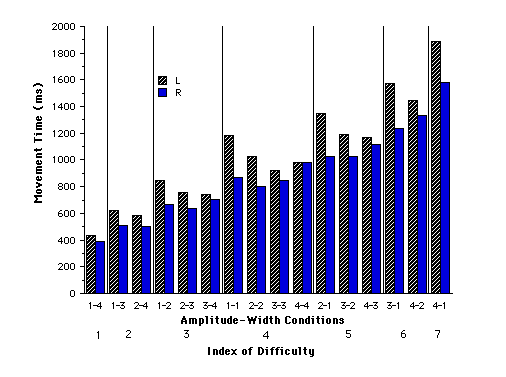
Figure 2. Movement time (ms) by amplitude, width, and
hand.
First number of amplitude-width combinations refers to amplitude
and second number refers to target width. For amplitude, 1 = 64 pixels,
2 = 128 pixel, 3 = 256 pixels, and 4 = 512 pixels. For target width, 1
= 8 pixels, 2 = 16 pixels, 3 = 32 pixels, and 4 = 64 pixels.

Table 2. Mean error rates (%) by device, task, and hand.
W = 8 W = 16 W = 32 W = 64 All Widths
Left Hand
Pointing 9.2 16.1 29.4 56.4 27.7
Dragging 14.2 24.0 43.6 77.5 39.8
Right Hand
Pointing 9.4 14.8 26.8 49.7 25.2
Dragging 33.7 39.1 54.6 84.2 52.9
Table 3. Mean effective target width (We, in pixels)
for the trackball by task and W.
Effective Target Width. Analysis of this dependent variable was
directed to the hypothesis of Annett et al. [1]
that superior preferred-hand performance for controlled movements is attributable
to a greater motor-output variability in the non-preferred hand. Unlike
the mouse and the stylus, the trackball showed a significant hand x task
interaction (mouse, F1,22 = .565; stylus, F1,22 = .100; trackball, F1,22
= 7.04, p < .05). This is shown in Table 3. Whereas results in the
right hand for trackball-pointing proved similar to those in mouse and stylus,
trackball-dragging yielded a large left-hand advantage, both in mean scores
and standard deviations, which was especially apparent at the smallest width.
At all target widths in Table 3, the left-hand dragging condition displayed
less variable error than the right-hand dragging condition.
The motor-output variability theory predicts that larger target amplitudes
should result in either a greater lengthening of movement time in the non-preferred
hand or a greater degradation of variable error. Neither result held in
the stylus, while only moderate support was found in the mouse. The finding
of superior left-hand We for the trackball was unexpected and will be discussed
below.
Constant Error. Table 4 summarizes constant error by device, task,
and hand. Both hands exhibited a small tendency to undershoot the center
of the target in all combinations, except for stylus-dragging where the
two hands had a similar tendency to overshoot the target. Biases were small,
on average falling within one pixel of target center. For all data, the
main effect of hand was not significant (F1,22 = .485). For subsets of
the data by device, the effect of hand was significant only for the trackball
(F1,22 = 4.49, p < .05). This was again due to the dragging task, where
the left hand showed greater accuracy (CE = -0.143 pixels vs. -2.38 pixels).
Mouse Stylus Trackball
Left Hand
Pointing -1.11 -0.31 -0.98
Dragging -0.16 +0.75 -0.14
Right Hand
Pointing -1.16 -0.42 -0.82
Dragging +0.49 +1.06 -2.38
Table 4. Constant error (pixels) by device, task, and hand.
DISCUSSION
The most important finding of the study is how the results for movement
time essentially extended the findings of Todor and Doane [18].
In tasks of equivalent difficulty, between-hand comparisons showed a right-hand
advantage for target width, but a left-hand advantage for amplitude. This
held in spite of the traditional Fitts prediction for equal movement time
in a given limb system, when the spatial conditions of a task calculate
to the same ID.
We found nothing in the analysis of accuracy to indicate that this main
result was influenced by different speed-accuracy tradeoffs in the two hands.
All accuracy measures were in fact largely independent of hand (with some
exceptions during mouse-dragging and trackball-dragging). In the case of
error rate this is not surprising, since the two subject groups were instructed
to monitor performance by error-rate feedback.
Nonetheless, the three accuracy measures used in the experiment clearly
captured distinct aspects of subject behavior. Constant error was most
sensitive to the mechanical differences between devices. Stylus-pointing
yielded smaller constant error than either mouse-pointing or trackball-pointing,
presumably because subjects were able to place the stylus on the tablet
with pen-point precision as opposed to the trackball technology of the mouse
and the trackball; conversely, the mouse and trackball were more accurate
than the stylus during dragging (excluding trackball-dragging in the right
hand). This was largely due to subjects inadvertently lifting the stylus
tip off of the tablet surface while dragging.
Error rate most clearly captured the difficulty of the dragging task. As
was seen, both groups settled for much higher error rates during dragging,
probably because subjects were unwilling to slow down sufficiently for this
task, given their relative success with the pointing task. Only the right-hand
group, however, showed unequal degradation between devices.
Going from pointing to dragging in the right hand, error rate for the mouse
degraded least of the three devices while movement time degraded most.
However, the lack of hand x task interaction on We in the mouse implies
that the right-hand group was no less variable during the dragging task,
just more careful. The speed-accuracy tradeoff here was most likely an
experimental artifactp;a side effect of daily work habitsp;in that
all subjects had experience on the mouse but not on the other devices.
Finally, the peculiar results for accuracy during the trackball-dragging
condition appear to have captured some underlying asymmetry in the motor
function of the two hands. Here all three accuracy measures displayed a
large left-hand advantage. Trackball-dragging also showed poor accuracy
only in the right hand, in the sense that the left hand was equally accurate
across devices when dragging.
Based on earlier results [11], it was speculated
that device differences may be attributed to the extent of interference
between the muscle groups required to manipulate a device, in particular,
that finger-thumb interference would be greater than wrist-finger interference,
and that this would contribute to superior performance in the mouse or stylus
relative to the trackball. Our results for accuracy in the trackball confirm
that finger-thumb independence was a significant requirement for trackball-dragging,
but that it primarily affected the right hand. This may be compared to
the finding by Kimura [8] that right-handers
perform paired finger flexions more easily with their left hand; both results
point to superior fine motor control in the left hand. The poor speeds
achieved with the trackball in the present experiment, therefore, may simply
have been a function of "ceiling effects" for this device. In
spite of this, ceiling effects were not found to affect differential accommodations
with respect to spatial target conditions on either task. In fact, of the
three devices tested, the trackball most clearly supported the Todor and
Doane theory.
CONCLUSION
The above provides the foundation on which design decisions can be based.
First, for rough pointing or motion, the non-dominant hand is as good as
the dominant hand across a large range of task difficulties. Therefore,
it is appropriate for tasks that do not require precise action, such as
scrolling (for example, as used in [3]). If
the non-dominant hand is used for pointing, wide targets should be used.
While there was the least change between hands with the trackball, non-dominant
performance with the mouse was still far superior. Readers are cautioned
not to draw from this that if one is to use both hands that two mice are
the best design choice. The ease of acquiring a fixed position device (such
as a trackball, touch pad, or joystick) may more than compensate for slower
task performance once acquired. This is something that must be evaluated
in context of the specific task.
ACKNOWLEDGMENTS
We would like to thank the members of the Input Research Group at the University
of Toronto who provided the forum within which this work was undertaken.
Thanks also to Dan Russell for his comments on the manuscript. Primary
support for this work has come from Digital Equipment Corp., Xerox PARC,
and the Natural Sciences and Engineering Research Council of Canada. Additional
support has been provided by Apple Computer Inc., IBM Canada's Laboratory
Centre for Advanced Studies, and the Arnott Design Group of Toronto. This
support is gratefully acknowledged.
REFERENCES
1. Annett, J., Annett, M., Hudson, P. T. W.,
& Turner, A. (1979). The control of movement in the preferred and non-preferred
hands. Quarterly Journal of Experimental Psychology, 31, 641-652.
2. Boritz, J., Booth, K. S., & Cowan, W.
B. (1991). Fitts's law studies of directional mouse movement. Proceedings
of Graphics Interface '91 ,Toronto: Canadian Information Processing
Society, 216-223 .
3. Buxton, W., & Myers, B. A. (1986). A study
in two-handed input. Proceedings of the CHI '86 Conference on Human Factors
in Computing Systems . New York: ACM, 321-326.
4. Fitts, P. M. (1954). The information capacity
of the human motor system in controlling the amplitude of movement. Journal
of Experimental Psychology, 47, 381-391.
5. Fitts, P. M., & Peterson, J. R. (1964).
Information capacity of discrete motor responses. Journal of Experimental
Psychology, 67, 103-112.
6. Flowers, K. (1975). Handedness and controlled
movement. British Journal of Psychology, 66, 39-52.
7. Greenstein, J. S., & Arnaut, L. Y. (1988).
Input devices. In M. Helander (Ed.), Handbook of human-computer interaction.
Amsterdam: Elsevier, 495-519.
8. Kimura, D. & Vanderwolf, C. H. (1970).
The relation between hand preference and the performance of individual
finger movements by left and right hands. Brain, 93, 769-774.
9. MacKenzie, I. S. (1991). Fitts' law as
a performance model in human-computer interaction. Doctoral dissertation.
University of Toronto.
10. MacKenzie, I. S. (1992). Fitts' law as a research
and design tool in human-computer interaction. Human-Computer Interaction,
7, 91-139.
11. MacKenzie, I. S., Sellen, A., & Buxton,
W. (1991). A comparison of input devices in elemental pointing and dragging
tasks. Proceedings of the CHI '91 Conference on Human Factors in Computing
Systems , New York: ACM, 161-166. .
12. Meyer, D. E., Smith, J. E. K., Kornblum, S.,
Abrams, R. A., & Wright, C. E. (1990). Speed-accuracy tradeoffs in
aimed movements: Toward a theory of rapid voluntary action. In M. Jeannerod
(Ed.), Attention and Performance XIII , Hillsdale, NJ.: Erlbaum,
173-226. .
13. Milner, N. (1988). A review of human performance
and preferences with different input devices to computer systems. In D.
Jones & R. Winder (Eds.), People and Computers IV, Proceedings
of the Fourth Conference of the British Computer Society Human-Computer
Interaction Specialist Group (pp. 341-362). Cambridge: Cambridge University
Press.
14. Oldfield, R. C. (1971). The assessment and
analysis of handedness: The Edinburgh inventory. Neuropsychologia,
9, 97-113.
15. Rabbitt, P. M. A. (1968). Errors and error
correction in choice-response tasks. Journal of Experimental Psychology,
71, 264-272.
16. Schmidt, R. A., Zelaznik, H., Hawkins, B.,
Frank J. S., & Quinn, J. T. (1979). Motor-output variability: A theory
for the accuracy of rapid motor acts. Psychological Review, 86, 415-451.
17. Sheridan, M. R. (1973). Effects of S-R compatibility
and task difficulty on unimanual movement time. Journal of Motor Behavior,
5, 199-205.
18. Todor, J. I., & Doane, T. (1978). Handedness
and hemispheric asymmetry in the control of movements. Journal of Motor
Behavior, 10, 295-300.
19. Quinn, J. T., Zelaznik, H. N., Hawkins, B.,
& McFarquhar, R. (1980). Target-size influences on reaction time with
movement time controlled. Journal of Motor Behavior, 12, 239-261.
20. Welford, A. T. (1968). Fundamentals of
skill. London: Methuen.
21. Woodworth, R. S. (1899). The accuracy of
voluntary movements. Psychological Review [monograph supplement],
3(2, Whole No. 13).